
Check the cashier before relying on ETH
 Available in US

A casino can offer browser or app play while accepting only conventional payments, so ETH support must be confirmed in its cashier.
What “online” Ethereum casino play actually means in the UK
“Online” tells you where you can play, not how you can pay. A casino may run in a browser or app and still take deposits only through conventional payment routes. For an Ethereum deposit to be possible, the cashier has to support a transaction in ETH for your account. The two things are separate.
That distinction is easy to miss when a site uses broad language about digital currencies or crypto-friendly play. A casino’s website can be online, its games can be available on your phone, and its cashier can still have no Ethereum option. The word “online” describes access to the service; it does not promise a particular way to fund your balance.
With Ethereum, the payment would involve moving ETH from a wallet through a route the casino accepts. That is different from paying with a debit card, even if both options appear on the same cashier page. A card payment uses the card and its issuer’s payment process. An Ethereum transaction uses a crypto wallet and needs the casino’s payment setup to accept it. One does not stand in for the other.
If you’re looking for a UK casino that accepts Ethereum, check that the payment method is available to you before depositing. The listed payout time can also help you set expectations for withdrawals.
-
Chanze
- Payout speed
- 1-3 business days
Chanze has a listed payout speed of 1–3 business days, which gives you a stated timeframe to consider when reviewing it.
-
Revery Play
- Payout speed
- 1-3 business days
Revery Play lists payouts at 1–3 business days. You can use that stated timeframe as one point to check when considering the casino.
-
BeOnBet
- Payout speed
- 1-3 business days
BeOnBet’s listed payout speed is 1–3 business days, giving you a specific withdrawal timeframe to bear in mind.
-
Dieselwin
- Payout speed
- 1-3 business days
Dieselwin lists a payout speed of 1–3 business days. For you, that is the available detail about its withdrawal timing.
-
NightWin
- Payout speed
- 1-3 business days
NightWin’s stated payout speed is 1–3 business days, a useful detail for you to consider when looking at withdrawal timing.
-
NightLuck
- Payout speed
- 1-3 business days
NightLuck lists payouts at 1–3 business days. You can keep that stated timeframe in mind when assessing it.
-
EvoSpin
- Payout speed
- 1-3 business days
EvoSpin has a listed payout speed of 1–3 business days, giving you a stated timeframe for withdrawals.
-
Zombillion
- Payout speed
- 1-3 business days
Zombillion lists a payout speed of 1–3 business days. That is the available information for you about its withdrawal timing.
-
SpinFormula
- Payout speed
- 1-3 business days
SpinFormula’s stated payout speed is 1–3 business days, which you can factor in when considering withdrawals.
-
Britsino
- Payout speed
- 1-3 business days
Britsino lists payouts at 1–3 business days, giving you a stated withdrawal timeframe to consider.
I used to read a payment logo or a general crypto claim as if it settled the practical question. It doesn’t. “Supports crypto” can sound definite while leaving the important details unclear: whether ETH is included, whether it is available to UK customers, and whether the cashier offers it to your particular account. The label is not the transaction.
There is also a UK-specific point that matters when comparing payment routes. Credit-card payments for gambling are banned. The regulator brought in the ban on 14 April 2020, and it has not been relaxed. So a credit card is not a fallback if an Ethereum option is unavailable. A payment route that disguises credit-card funding does not change that restriction.
Debit cards are a different matter. UK casinos commonly accept debit cards, including Visa and Mastercard, but that says nothing about whether they accept Ethereum. A debit card is simply another possible way to deposit, subject to what the operator supports and what your card product permits. Seeing Visa or Mastercard listed is not evidence that the casino can receive ETH.
That matters because payment symbols can create a false sense of certainty. You might see a familiar card brand and assume the site has a broad, flexible cashier. Or you might see crypto mentioned in promotional wording and assume Ethereum is one of the supported assets. Neither conclusion follows from the other. The payment route has to be considered on its own.
 Casinos That Accept Tether in the UK: What to CheckLearn how to verify USDT in a UK account’s cashier and distinguish current payment options from promotional listings. Menus can vary by…
 Casinos That Accept Boku in the UK: Deposits & BonusesLearn how Boku deposits work with casino bonuses and slot play. A deposit can reach your account without qualifying for a welcome…
The same distinction applies to searches for an Ethereum casino in the UK. A site can be a real-money online casino serving British customers without supporting crypto payments. For British customers, legal remote gambling operators must hold the relevant Gambling Commission licence; that regulatory status and the cashier’s payment options are separate questions. A licence does not itself mean that ETH is accepted, just as a crypto reference does not establish that a site is authorised to serve the UK market.
So, when someone says they found an “online Ethereum casino”, I’d want to know what they mean. They may mean an online casino that mentions cryptocurrency somewhere, or one whose cashier actually presents Ethereum as a deposit choice. Those are not equivalent. If the cashier cannot receive an ETH transaction, the casino is online, but it is not offering an Ethereum payment route to that customer.
The wording can also blur whether the claim applies to the UK at all. Payment options may differ by market, and a general page may describe services that are not offered to a British account. Treating an international marketing page as proof of UK availability is another shortcut I would avoid. The practical answer lives in the account’s available payment choices, not in the broadest version of the site’s sales pitch.
It helps to keep three ideas separate: the casino’s online service, its legal permission to serve customers in Britain, and the methods its cashier actually supports. They answer different questions. A site may satisfy one of those descriptions without satisfying the others.
That is the basic distinction behind the phrase “online Ethereum casino UK”. Online access does not mean Ethereum access, and debit-card acceptance does not imply crypto acceptance. Nor can credit-card gambling fill the gap: that route is prohibited. Once those points are clear, it becomes harder for vague wording to make a payment option seem more certain than it is. Separate things.
Check the cashier before you count on paying with ETH
A page that mentions “crypto” has not necessarily confirmed that you can pay with Ethereum. That word can cover different assets, and a general payment summary may not tell you which one is available to a customer in the UK. I’d treat a broad claim as a reason to check the cashier, not as a green light.
A specialist review of casino payment options may group Visa, Mastercard, bank transfer, e-wallets and several cryptocurrencies together. That gives you an outline of the methods discussed, but it does not establish that Ethereum is one of the supported choices for your account. It also doesn’t confirm that a listed method is available for the transaction you’re about to make.

The cashier is where the useful answer should appear. Sign in to the UK account you intend to use, open its payment options and look for Ethereum by name. Don’t assume that a Bitcoin option, a generic “cryptocurrency” label or a logo elsewhere on the site means ETH is accepted. If Ethereum is absent, don’t try to infer support from the site’s wider marketing.
I’ve learned to separate “listed somewhere” from “available to me now”. It sounds obvious, but it is easy to read a payment page quickly, see familiar logos and fill in the gaps yourself. That is how a broad statement becomes, in your head, a confirmed method. Check the actual cashier instead.
If Ethereum is displayed, read the details attached to that option before you proceed. Check whether it is selectable for your UK account and whether the cashier gives instructions for the transaction you want to make. If the option is unclear, unavailable or accompanied by conditions you do not understand, pause and ask the operator through its support channel. A confident answer on a promotional page is not a substitute for an answer about your account.

The same caution applies to cards. A specialist review may name Visa and Mastercard, but that does not prove that every UK card product carrying those brands will work. Current availability and card eligibility need checking in the cashier. The logo is a clue, not approval. If the cashier rejects your card, don’t keep testing different details or assume that another product with the same brand will be treated identically.
Keep the payment route you select in mind as you move through the cashier. The displayed option, the instructions shown for it and the confirmation before you submit should make sense together. If the method changes, or the final screen no longer matches what you thought you selected, stop and recheck rather than sending funds on the strength of an earlier page.
There is a difference between a casino saying it supports digital currencies and the cashier presenting Ethereum as an available choice for your specific account. That distinction matters more than a banner or an old list copied across a review page. Payment menus can change, and a method mentioned in general material may not be enabled for every customer or transaction.
Do
- Sign in to your UK account to check the cashier
- Look for Ethereum specifically by name
- Ask support if an option is unclear
Don't
- Assume "crypto" means ETH is available
- Infer support from general marketing
- Guess based on familiar logos
So I would not make a deposit plan around a casino with Ethereum until I had seen ETH offered in the UK account itself and understood the cashier’s instructions. If support confirms that it is not available, take that as the answer rather than searching for a workaround. A payment option should be clear before you commit, not something you discover by trial and error.
Before confirming, take a moment to check the asset name and the details on screen. If anything is inconsistent, leave the transaction unfinished and get clarification. It is a small pause, but it beats guessing with money involved. No assumptions.
Ethereum and slots: what to check before you play
“Ethereum slots” can sound as if the game itself handles the coin. In practice, the slot and the payment route are separate things: you choose a game inside the casino, while deposits are handled through the account’s cashier. So a site describing its games as Ethereum video slots does not, by that wording alone, tell you whether your account can fund them with ETH.
I used to treat labels as answers. They aren’t. Before opening a slot, make sure you understand how the payment route you intend to use connects to your casino balance, and that the money is available there. If that step is unclear, I would pause rather than assume the game will sort it out. A game’s title, format or feature set cannot confirm payment support.
The same goes for Megaways slots. The format tells you something about how a slot plays, not which payment methods the casino accepts. If you want to play a Megaways game after funding an account with Ethereum, check the route first and then look at the game’s own rules. Don’t read “Ethereum Megaways” as proof that a particular game or casino supports that combination.
 Casinos That Accept E-Cheque in the UK: What to CheckLearn why a casino’s e-cheque listing is not confirmation, what to check in its logged-in cashier, and why deposit and withdrawal options…
 Casinos that accept USDC in the UK: what to checkLearn why a general crypto label does not confirm USDC is available to UK customers, and what to check in the live…
British slot rules affect the session
There is one practical detail that can surprise people who have played slots elsewhere: online slot autoplay is banned in Britain. You must start each spin yourself. Each spin must also last at least 2.5 seconds, so a run of spins cannot be made to happen instantly through an autoplay setting.
That changes the rhythm of play. I’ve found it easy to focus on the next spin and stop noticing how long I’ve been sitting there. Manual play doesn’t remove that risk, but it does mean you should expect to make each spin yourself rather than set a sequence running in the background. If a screen appears to offer autoplay, don’t treat that as permission to use it on a British online slot.
The maximum stake per game cycle also depends on age. For customers aged 25 and over, the limit is £5 per game cycle; for customers aged 18 to 24, it is £2. The £5 limit for all adults came into effect on 9 April 2025, but the lower limit still applies to younger adults. These are stake limits, not a guide to what you should spend. Check the amount shown for the game cycle before confirming a spin.
This is worth noticing before you get caught up in the pace of a session. A slot’s interface may make the stake easy to change, but that doesn’t make every displayed amount suitable or available to every customer. Small print matters.
Check the game before committing
Slot pages can make a game look simple: select a stake, press spin, see what happens. I’d still take a moment to read the game information before starting. Check how the stake is displayed, what counts as a game cycle and whether the game has features that affect the way a round proceeds. If something is unclear, don’t guess based on a familiar-looking layout.
Keep the payment question separate from the game question. First, establish that the route you plan to use has actually funded your account. Then confirm the slot’s rules and the stake you have selected. An Ethereum deposit, if available to your account, does not make every slot an “Ethereum slot”; it is simply one possible way of funding play. Nor does a slot’s availability prove that ETH can be deposited or withdrawn.
I wouldn’t call any game the “best” Ethereum slot on the basis of its name or theme. That tells you nothing reliable about payment compatibility, and a game’s presentation is not a reason to skip its rules. Check the game, check the stake, and play each spin manually.
No clever shortcut.
Casino sites, account currency and payment compatibility
A payment logo and a currency label answer different questions. A site might describe several ways to pay while your account is set up in a currency that does not match the one you use day to day. For anyone comparing Ethereum casino sites in the UK, that distinction matters: seeing a reference to crypto does not tell you how your balance will be displayed or whether a conversion will happen along the way.
 Casinos That Accept eCheck in the UK: How to VerifyCheck the casino cashier for eCheck availability, then review deposit limits, currency, app support, promotion rules and whether withdrawals use the same…
 Casinos That Accept Neosurf in the UK: What to CheckLearn how to check Neosurf availability at checkout and whether a deposit qualifies for a promotion; payment and game eligibility are separate…
I used to treat “GBP supported” as a simple yes-or-no feature. It is not quite that simple. A specialist review has stated that GBP is supported on the pages it covered, but that does not confirm the setting on every operator’s current site or on your own account. Check the currency shown during registration or in the account settings before making a first transaction. A broad claim on a landing page is not the same as the currency assigned to your account.
That check helps you spot a mismatch before money moves. If your account balance is held in a different currency from the one you expect, deposits, displayed balances and later calculations may involve conversion. The exact treatment depends on the operator and payment route, so do not assume that an amount sent in one currency will appear unchanged in another. Read the transaction summary rather than relying on a banner or a general payment-method page.
Ethereum adds another layer to the question, but it does not remove the currency one. A crypto payment route and the casino’s account currency are separate parts of the journey. Even where a site advertises Ethereum, you still need to understand what currency the account uses and how the transaction value is represented. I would not call a site a “best Ethereum casino” based on a currency badge or a generic list of payment options. That tells you too little about compatibility.
Keep an eye on the point where the amount is quoted and the point where it is accepted. If a payment page presents a value in one currency while your account balance is recorded in another, pause and check the conversion terms. A small-looking difference can be hard to notice when you are focused on completing the transaction. It is easier to understand the cost before confirming than to reconstruct it afterwards.
The same principle applies when comparing Ethereum slots or other casino games: the game label does not tell you what currency your account uses. Treat the balance shown in your account as the reference point, and make sure you understand how any payment amount relates to it before starting. No guesswork needed.
A trusted-looking design, familiar wording or polished marketing is not proof that the account and payment route are compatible. I have learned not to fill in those gaps myself. Check the actual currency setting, read the amount shown at confirmation, and stop if the conversion is unclear. That is a more useful comparison than a long list of sites claiming to support everything.
Deposits and withdrawals: don’t assume ETH works both ways
A payment button that lets you put money in does not, by itself, tell you how you will get money out. I’d treat an Ethereum deposit and an Ethereum withdrawal as separate questions: does the cashier accept ETH for deposits, and does the site also let you withdraw to that method? If only the first answer is clear, the full payment route is not clear.
 Casinos That Accept Interac in the UK: Payment ChecksLearn why an Interac deposit does not confirm which slots are available, and what to verify in the casino cashier before paying.
 Casinos That Accept Zimpler in the UKCheck whether Zimpler is available in a signed-in UK casino cashier, and why a payment-page logo may not confirm eligibility.
That distinction matters because UK anti-money laundering rules generally require a payout to go back to the original payment source. So even if a casino accepts an Ethereum transfer when you deposit, do not assume it will return a withdrawal in ETH. The operator may need to follow its closed-loop rules, and the route available for a payout can depend on how the original funds arrived.
I used to see a method listed and mentally tick off the whole journey. That was too optimistic. Now I check the withdrawal terms as well as the deposit screen, before I decide a payment route will suit me. If the wording is unclear, I would ask the operator directly rather than rely on a general statement that it accepts cryptocurrency. The small print matters.
A bank route can be a useful comparison, not a promise that it will be quicker or simpler in every case. A specialist review has described open banking and bank transfers as offering instant deposits and fast withdrawals at many sites. That is a broad description, not a guarantee for a particular casino or account. Check what the cashier says about both directions, and whether the same bank route can be used to receive a payout.
For an Ethereum casino UK players are considering, the practical question is not just whether ETH appears somewhere on a payment page. It is whether the deposit and withdrawal arrangements form a workable pair for that account. Compare that with a familiar bank option, then decide with the full journey in view.
No assumptions.
Bonuses can change which payment methods are worth using
A payment button in the cashier tells you that a route may be available for a transaction. It does not tell you whether that deposit will count towards a welcome offer, a deposit match or another promotion. I used to treat those as the same thing. They aren’t.
Common bonus exclusions
Specialist reviews have reported that payment methods like PayPal, Skrill, and Neteller are often excluded from bonus eligibility.
The deciding detail is usually in the promotion’s terms: which payment methods qualify, whether the offer must be claimed first, and what happens if you deposit using a method that is excluded. Read those conditions before paying, not after. If the wording is unclear, ask the operator to confirm eligibility for your account and chosen method before you deposit.
That matters when you’re considering an Ethereum casino bonus. A site mentioning cryptocurrency, or showing a promotion on its homepage, is not confirmation that an ETH deposit qualifies. The offer could exclude that route, or the cashier may not offer it to your UK account at all. Check the specific promotion and payment option together; don’t assume that an Ethereum welcome offer, deposit bonus or no-deposit offer is available simply because you have seen it advertised.
Payment methods with familiar names need checking too. A specialist review has reported that PayPal may be excluded from bonus eligibility, despite its popularity for speed and convenience. Treat that as a possibility to verify, not a rule that applies to every promotion. The same kind of specialist review has reported that Skrill and Neteller are often excluded from promotions. Their presence as deposit options does not settle whether a particular bonus accepts them.
I now separate the decision into two checks: can I use this method, and does this particular promotion accept it? If you care more about the offer, compare its terms with the eligible payment methods shown for your account. If you care more about using a specific route, be prepared for the promotion not to apply. Neither choice is automatically better; it depends on what the terms actually say.

Keep a copy of the promotion conditions you relied on, especially if the wording changes between the offer page and the cashier. If a deposit has already been made and the bonus does not appear, contact customer support before making another payment. A claim such as “bonus included” is not enough on its own. The method and the offer need to match.
No assumptions. Just the terms.
Games, limits and taking a break
The payment method is only one part of playing casino games. Before you start, look at the controls attached to your account and decide what you want them to do for you. I used to treat a limit as something I could sort out later. That was the wrong moment to think about it.
Remote gambling licensees must prompt new customers to set a financial limit before their first deposit. They must also make account-level limit controls accessible. Take a moment to find those controls rather than assuming they will be obvious when you need them. The point is to set a boundary while you are calm, not while trying to win back money or rushing through a session.
A limit is a personal control, not a prediction of what you will spend. Choose an amount you can afford to lose, and check what the account lets you limit. If the controls are unclear, pause and ask the operator how they work before playing. The same applies whether you are looking at casino games with Ethereum or using another payment route: an Ethereum label does not change the value of setting a boundary.
- Locate the financial limit controls
- Set a boundary you can afford to lose
- Identify the option for taking a break
- Verify the self-exclusion tools
It is also worth knowing where to find the options for taking a break or closing access to gambling. UKGC-licensed casinos must provide responsible-gambling tools, including self-exclusion. Those controls are not a substitute for your own decision to stop, but they give you a way to act on it without relying on willpower alone. A short pause counts. So does stepping away for good.
You may come across phrases such as “non-GamStop Ethereum casino”. A label like that does not tell you that a site offers UK protections. Remote gambling licensees serving Great Britain must hold the relevant UK Gambling Commission licence; offshore sites sit outside that regulatory system. Don’t let a payment option or game catalogue distract you from whether the account has the controls you expect.
Before playing, I’d check two things: that the financial-limit settings are easy to find, and that you know how to take a break. Small checks. Better than scrambling later.
Before you play: match the payment account to your own details
Before making a deposit, check that the casino account and the payment route are yours, and that the details you have entered match. It is a small bit of housekeeping, but it can prevent a basic ownership mismatch from turning into transaction friction.
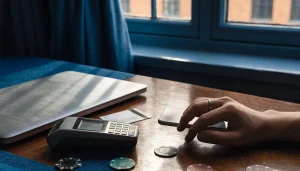
I learned not to treat “it went through” as the same as “everything is in order”. A payment might appear to work, yet using someone else’s account or route can leave you having to explain who owns the funds. Keeping the casino account and payment method under the same customer’s details gives you a cleaner story if anything needs checking.
That applies whether you plan to play casino games with Ethereum or use another payment route. If you are considering an Ethereum casino payment, make sure the wallet or route you intend to use is yours, rather than a friend’s or a shared account. This does not establish that the casino accepts ETH; it is simply a sensible ownership check before you play.
A quick check before depositing
- Use your own casino account, with your own details.
- Choose a payment route that belongs to you.
- Check that the names and account information you provide are consistent.
- If the route is shared or belongs to someone else, do not assume that permission to use it will remove ownership questions.
I used to think a borrowed card or account was just a shortcut. It can instead make a straightforward payment harder to explain. Keep it in your name. Less to untangle.
This is not a promise that matching details guarantees approval or that every payment will proceed without questions. It just reduces one avoidable source of confusion: whether the casino account and the payment route belong to the same person. If you are preparing to play slots with Ethereum, make that check before sending funds, not after a mismatch has become the issue.
Keep any payment confirmation and the details you used together, so you can refer back to them if needed. And if a payment route is not clearly yours, pause and clarify that before depositing. A neat paper trail is not glamorous, but it is better than trying to reconstruct who paid from which account later.
Deposit amounts and limits to check before you start
A small advertised minimum can make a deposit look straightforward, but it does not tell you how much you can add later or whether the same amount applies to every payment route. A specialist review puts minimum deposits in the £10–£20 range, depending on the method. Treat that as a rough indication, not a promise: the amount shown for your own account is the one that matters.
Before choosing an amount, check the limit attached to the payment method you intend to use. Casinos may set a cap per transaction, alongside separate daily or monthly maximums. Those ceilings can differ between methods, and an account’s status can affect what is available. A limit you saw in a general guide may not match the option presented to you.
I’ve made the mistake of treating a displayed minimum as a sensible target. It only tells you the smallest permitted deposit; it says nothing about whether that amount fits your budget. Decide what you can afford to lose before opening the payment screen, then check that the amount you enter stays within your own boundary as well as the site’s limit. If the payment screen allows more than you planned, that is not a reason to raise your budget.
With Ethereum in particular, do not assume that a minimum or maximum advertised for another payment method also applies to an ETH transaction. If a site presents itself as a possible Ethereum casino, the relevant amount is the one shown for the specific route and account—not a figure copied from a list of Ethereum casinos or a general casino guide. If ETH is not displayed as an available option, a published limit for another method does not confirm that ETH can be used.
Check the permitted amount before you commit, and look for separate transaction, daily and monthly caps. If any of those would make you deposit more than you intended, stop and reconsider rather than trying another route just to get around the limit. No guesswork needed.
Live casino payments: allow for approval and verification
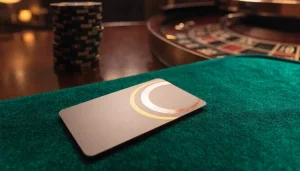
A live table can make the session feel immediate; a withdrawal is a separate process. Even if you are looking at an Ethereum live casino, do not assume that money will be returned as quickly as a game round ends. The casino still has to review the withdrawal, and your account’s verification status can affect how long that takes.
A specialist casino review notes that processing time includes the operator’s internal approval, not just the payment provider’s transfer. That distinction matters. A request can be submitted successfully and still be pending while the casino checks it. First withdrawals may take longer when KYC is still being completed. In other words, “instant” can describe one part of a payment journey, not the whole thing.
I used to treat a withdrawal button as a finish line. It is more like handing the request over for review. If you have played live roulette, blackjack or another table game, the format of the game does not remove that step. Nor does the word Ethereum in a site description tell you how a particular withdrawal is handled. Read the cashier and withdrawal terms for the account you actually hold.
A specialist review also points out that withdrawal speed depends on both the casino’s approval process and whether the account is fully verified. So, before relying on a live casino Ethereum payment route, check what the site asks for to complete verification and whether anything remains outstanding on your account. A delay may be administrative rather than a failed payment, but you should use the operator’s stated process to follow up.
Keep the expectation plain: live play may be quick; getting funds out involves checks. If verification is needed, allow for that before counting on the money being available. No drama. Just another step.
What is the fastest withdrawal method for UK casinos?
PayPal, open banking and debit cards linked to fast payout systems are generally among the quickest options. Your account’s verification status and the casino’s approval process also affect how soon you receive funds.
Do UK casino withdrawals require verification?
Yes, verification may be needed, and it can take longer to process a first withdrawal while checks are completed. Keeping your account details and payment method in your own name can help avoid basic ownership issues.
Why must withdrawals return to the deposit method?
Returning funds to the original payment source is a common anti-fraud and anti-money-laundering control. Using a different route may require additional verification.
Are fast casino withdrawals guaranteed?
No. The timing depends on the casino’s internal approval process and whether your account is fully verified.
Which payment methods are accepted in Great Britain?
Common options include debit cards such as Visa and Mastercard, PayPal, open banking, bank transfers, and e-wallets such as Skrill and Neteller. Some casinos also offer Apple Pay or Jeton, while Paysafecard is for deposits; check the cashier for methods available to your account.
Why can a fast payout casino still delay my withdrawal?
A fast payout method does not bypass the casino’s internal approval process. Verification, particularly for a first withdrawal, can add time; bank transfers may also be affected by cut-off times and weekends.
Can I deposit in GBP?
Yes, GBP is supported, but check your account currency before your first transaction to avoid conversion.
Casino Payments in the UK: Methods and Options
Content created by the «rendersbyshailesh» team
