
Read the Reference Card Before You Choose
 Available in US
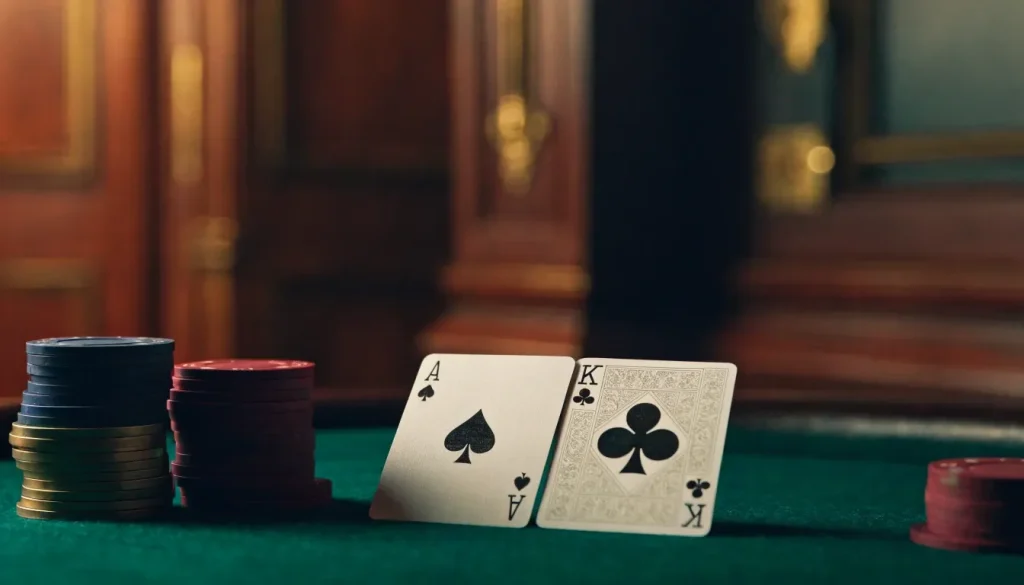
The guide explains how live, reel and draw Hi-Lo formats differ, and why a simple Higher-or-Lower guess does not create an edge.
How the Live Hi-Lo Round Actually Works
In a live Hi-Lo game, the first thing to watch is the card already face up. It is not just a result from the previous hand: that winning card becomes the reference for the next round. Your choice is judged against it. If you bet Higher, the next winning card must rank above it; if you bet Lower, it must rank below it.
That makes the exposed card the starting point for every decision. Say the reference is a middle-ranking card. You can look at the possible directions and decide which side seems more favourable, or compare the payouts attached to Higher and Lower. The card does not change while you make that choice. It is the next winning card that determines whether the bet succeeds.
A live table may also show proposition bets: wagers on a particular outcome rather than simply whether the next card is higher or lower. The visible reference matters here too. If an outcome would already count as a win because it matches the exposed card, do not assume it can be drawn again. The previous winning card is no longer in the shoe for that decision. That detail is easy to overlook when you are focused on the bet labels.
If you’re considering hi-lo casino options in the UK in 2026, payout timing is one practical detail to check. Use these verdicts as a quick reference for the stated withdrawal speed.
-
Chanze
- Payout speed
- 1-3 business days
Chanze has a stated payout speed of 1–3 business days, giving you a clear timeframe to consider.
-
Revery Play
- Payout speed
- 1-3 business days
Revery Play lists a payout speed of 1–3 business days. That is the available detail to help you assess its payout timing.
-
BeOnBet
- Payout speed
- 1-3 business days
BeOnBet’s stated payout speed is 1–3 business days, a useful point for you to note when considering withdrawals.
-
Dieselwin
- Payout speed
- 1-3 business days
Dieselwin lists payouts as taking 1–3 business days. This gives you a stated timeframe for payout speed.
-
NightWin
- Payout speed
- 1-3 business days
NightWin has a stated payout speed of 1–3 business days. Consider this timeframe when reviewing its payout information.
-
NightLuck
- Payout speed
- 1-3 business days
NightLuck lists a payout speed of 1–3 business days, providing you with a clear detail about payout timing.
-
EvoSpin
- Payout speed
- 1-3 business days
EvoSpin’s stated payout speed is 1–3 business days. This is the available specific detail about its payouts.
-
Zombillion
- Payout speed
- 1-3 business days
Zombillion lists payouts at 1–3 business days, giving you a stated timeframe to factor in.
-
SpinFormula
- Payout speed
- 1-3 business days
SpinFormula has a stated payout speed of 1–3 business days. You can use this as a reference for its payout timing.
-
Britsino
- Payout speed
- 1-3 business days
Britsino lists a payout speed of 1–3 business days, which is the available specific point about its payouts.
Once the betting decision is made, the dealer’s sequence continues. Three cards are burned before the next winning card is revealed. Those burned cards are removed from the immediate run of play; they are not the card used to settle your Higher or Lower choice. The winning card comes after them, and its value is compared with the face-up reference.
A higher result settles a Higher bet as a win, and a lower result settles a Lower bet as a win. If the next winning card has the same value as the reference, both Higher and Lower lose. There is no safe middle ground in that outcome. It is not a push for those two bets; the direction you chose has failed to occur.
That tie rule changes how I read the table. I used to think of Higher and Lower as covering almost every possibility, with a tie as a harmless pause. It is not. The matching value is a losing result for either direction, so it belongs in the risk of the decision. A card that looks promising for Higher can still be followed by the same value, and the bet loses.
The winning card then becomes the exposed reference for the next hand. The table has moved on, but the new card is still doing the same job: it sets the comparison point for the next decision. You are not comparing the next card with the original card from several hands ago. You are comparing it with the latest winning card currently shown.
 Games: UK Casino Game and Slot GuidesBrowse pages on UK casino games, slot types and casino providers, including reel slots, volatility, RTP, bingo, craps and game shows.
 Best RTP Casino Slots in the UK: RTP ExplainedLearn how slot RTP differs from session results, how to check a game’s stated return and why a high percentage does not…
A continuous shuffler is used in the described live setup. Cards from the previous round are returned to it immediately, rather than being kept out of play for the rest of the session. So, while the exposed card is unavailable for the current decision, earlier cards do not stay permanently removed from future rounds. The shoe is not a running count that steadily empties as hands pass. It is a circulating supply.
One specialist review describes the game as using six 48-card decks, with the tens removed from each deck. Treat that as a description of that reviewed setup, not a rule to assume at every live table. The practical point for the round is the same: follow the reference card and the table’s stated bet conditions, rather than carrying assumptions over from another version.
For straightforward Higher and Lower bets, the recommended approach is to choose the side with the larger payout. That is a way to make the choice between the two offers; it does not turn the bet into a certainty. A matching card still loses, and the card revealed after the burn sequence can still go the other way. I have learned not to read a bigger payout as proof that the outcome is more likely. It is a price attached to the bet, not a promise.
Live Hi-Lo Round
-
1
Reference Card
Identify the face-up winning card from the previous hand as the starting point.
-
2
Betting Decision
Choose whether the next card will be Higher or Lower based on the reference and payouts.
-
3
Burn Sequence
Wait for the dealer to burn three cards before the next winning card is revealed.
-
4
Result Settlement
Compare the new winning card to the reference to determine if the bet won or lost.
The sequence is simple once you separate its parts: the last winning card stays visible as the reference, you make a decision against it, three cards are burned, and the next winning card settles the wager. Then that result becomes the reference for the next hand. The continuous shuffler returns cards from the prior round, but not the exposed reference for the decision currently being played.
That is the rhythm of live Hi-Lo: reference, choice, burn, reveal. The mechanics are easy to follow. The uncertainty is the point.
What Makes a Hi-Lo Game Worth Considering?
When I look at a Hi-Lo game, I try to separate the decision in front of me from the way it is presented. “Best” can sound like a clear verdict, but a game’s stated return tells you something about its betting terms—not whether you will win, or whether a particular session will go well. I learned that distinction the expensive way.
A specialist review reports a highest return of 96.23% for a particular Hi-Lo game when the player bets higher than 4 or lower than 10. Treat that as a figure attached to those stated conditions, rather than a promise about every version of Hi-Lo or every bet within a game. The two thresholds matter: changing the choice changes the bet being assessed. It is not a blanket return for any higher-or-lower guess.
 JetX Casino Game in the UK: Slot or Something Else?Learn how JetX’s casino-game label differs from “slot,” and what to check about its mechanics, UK access, licensing, demos and real-money terms.
 Live Blackjack Online Casinos in the UK: How It WorksLearn how live blackjack hands work, which rules and table features to compare, and why betting systems cannot remove the house edge.
A return figure is useful as a comparison point, but it is easy to read too much into it. It describes an expected relationship between stakes and returns across play, not the outcome of the next decision. You can make a choice that matches the stated strategy and still lose. You can also have a winning run without having found an edge. One hand proves very little. The long view is the point.
That is why I would check what the figure refers to before using it to judge a Hi-Lo game. Does it apply to a specific threshold choice, or is it being presented as though it covers the whole game? Is the return tied to the version you are actually considering? A percentage without its conditions is a thin basis for deciding whether a bet is attractive. The headline number can look tidy; the detail does the work.
The payout changes the decision
The basic practical comparison is between the available Higher and Lower bets and what each pays. The suggested approach is to take the side with the larger payout, rather than choosing Higher or Lower simply because it feels more likely. That does not turn the bet into a sure thing. It is a way to make the choice using the information on the table instead of a hunch alone.
I have caught myself doing the opposite: picking the direction that looked obvious and barely glancing at the payout. “Easy” is not the same as valuable. The chance of winning and the amount paid are connected parts of a bet, so looking at one while ignoring the other leaves you with an incomplete picture. If you cannot tell which choice pays more, pause and read the displayed terms before committing.
Do
- Compare Higher and Lower payouts
- Choose the side with the larger payout
- Read the displayed terms before committing
Don't
- Pick a direction based on a hunch alone
- Ignore the payout when choosing the obvious direction
- Use strategy notes to recover a previous loss
A larger payout may be attached to an outcome that is harder to hit; the number alone does not tell you that a bet is favourable. Nor does the higher-paying option make a good choice on every turn. The recommended comparison is specifically about Higher and Lower bets, and it should not be stretched into a claim that every type of Hi-Lo wager has the same calculation. Different choices can carry different terms.
I also try not to treat a strategy note as a system for recovering a loss. If the last guess went wrong, that does not make the next direction more likely to pay. Raising a stake to make back what has gone is still a decision made under pressure, not a better reading of the bet. I have done it. It did not make the game fairer.
What “worth considering” can mean
For me, a Hi-Lo game is worth a closer look when its payout information is clear enough to understand and its stated return is tied to identifiable choices. The reported figure gives one point of reference: the stated 96.23% applies to betting higher than 4 or lower than 10 in the game described by the specialist review. It is not a universal label for Hi-Lo, and it does not tell you how a different format behaves.
 Fruit Machine Slots UK: How Online Reels WorkLearn how digital fruit slots differ from pub machines and how an RNG determines each result, alongside guidance on layouts, demos and…
 Endorphina Casinos in the UK: What to VerifyLearn how to check a slot’s provider and distinguish game makers from casino listings; the provider details here identify Amatic, not Endorphina.
That also means a search for the best Hi-Lo casino should not become a hunt for a single magic percentage. The bet itself deserves attention first: which decision is being offered, what does each side pay, and what conditions does the stated return assume? Once those are clear, you can judge the game’s terms without confusing a favourable-looking number with a personal advantage.
There is no need to turn every card into a calculation. But I would avoid choosing purely by instinct when the payouts are visible. Compare them, make the choice deliberately, and remember that a stated return is not a shield against losing. Even the more considered bet can lose. That is the part the marketing tends to leave out.
Live Hi-Lo Online: Check the Format Before You Join
A live Hi-Lo table can look self-explanatory: a card is showing, and you choose whether the next one will be higher or lower. That basic idea is not the whole rulebook, though. Before I put money down, I want to know exactly which card the game is comparing against and what choices the table actually offers.
The reference card matters. In the live format described here, the winning card from the previous hand stays exposed and becomes the reference for the next round. So the card you see may not be a fresh starting point dealt specifically for your decision. Check the table display and its rules to confirm how that reference is selected and when it changes. If you assume the game resets in a way it does not, you can make a decision based on the wrong card.
- Identify which card is the current reference
- Confirm the card value order in the rules panel
- Check if a same-value bet is available
- Verify how the game handles a tie result
Then check what “higher” and “lower” mean at that table. The central choice is whether the next card will rank above or below the current reference card, but card order should be clear before you play. Don’t rely on a graphic, a quick animation or a label that you have not read properly. Find the rules panel and make sure you understand how the available card values are ordered.
Some versions also let you bet on the next card matching the reference value. Others may present only the higher-or-lower choice. That extra option changes what you can select, so look for it in the actual betting interface rather than assuming every live Hi-Lo table offers it. A familiar name does not guarantee identical rules. Small print, big difference.
The same goes for what happens when the next card matches the reference. Don’t guess whether a tie counts as a loss, a push or a separate winning outcome; read the table’s own explanation before placing a bet. The available choices and their consequences belong to the format you have opened, not to a general idea of what Hi-Lo ought to mean.
I used to treat the “live” label as if it told me everything. It tells you something about presentation, not necessarily enough about the game’s comparison rules. Take a moment to open the information panel and check how the reference card is identified, which bets can be placed and how matching values are handled. If the rules are hard to find or the display leaves the comparison unclear, I would not try to work it out while a bet is waiting.
 Video slots in the UK: what matters in playUnderstand how paylines, volatility and bonus rounds shape a session, and why a displayed win can still be smaller than the stake.
 Casino Dice Games in the UK: How They WorkLearn how dice wagers, online random-number games, demo modes and crypto options differ, and why the casino advantage applies over continued play.
It also helps to separate the table’s visual layout from its rules. The card on screen might be prominent, while the explanation of what happens next sits behind a help button or a smaller information icon. Read that explanation before joining a betting round. You are not looking for a promise about how often a choice will win; you are checking that you can tell what the choice means.
A useful check is simple: can you point to the reference card, explain what “higher” and “lower” compare it with, and tell whether a same-value bet is available? If not, pause rather than filling in the gaps from another game you have seen. Live Hi-Lo online is easier to follow once those details are settled. No guesswork before the guess.
Hi-Lo Is a Simple Guess, Not a Simple Edge
Hi-Lo strips a card game down to one question: will the next card be higher or lower than the one showing now? You make a call, the next card gives you the answer, and the game moves on. Some versions also let you predict that the next card will have the same value.
That is the whole appeal, really. You do not need to build a hand or remember a complicated sequence of actions before you can understand the choice. But I’ve learned not to confuse an easy decision with an easy way to win. The question is simple; the uncertainty is still there.
The card already on display is your reference point. “Higher” means the next card’s value is above it; “lower” means it is below. If a same-value choice is offered, that is a separate prediction, not a way to cover both directions. Check which options the game actually presents rather than assuming every Hi-Lo table or screen uses the same set.
The displayed card can make one direction feel obvious. A card near one end of the scale may leave more room on one side than the other, while a card nearer the middle may make the choice feel less clear. That intuition can help you understand the question, but it does not reveal what the next card will be. I used to treat “looks likely” as if it meant “will happen”. It doesn’t.
Nor does the name tell you everything about the rules. Hi-Lo describes the central comparison, not necessarily every detail of how a particular game handles a result or presents its choices. If you see a same-value option, take a moment to understand what it means in that version before treating it as just another button. Familiar label, different details.
A useful way to approach the decision is to separate the prediction from the feeling around it. Ask what the game is comparing, identify the choices offered, then make your call without pretending you have certainty. A previous result can feel like a clue, especially when you have watched several cards. That feeling is easy to mistake for a pattern. A guess remains a guess.
“Simple” is fair as a description of the basic action. It is less fair when it is used to imply that the game is effortless to beat. The mechanic gives you a clear choice, but clarity is not an advantage by itself. You can understand exactly what higher and lower mean and still be wrong on the next reveal.
 Best High RTP Slots UK: What RTP Really MeansLearn how RTP works, why similar figures can feel different, and how to check a game's version; RTP reflects outcomes over extensive…
 Live Casino Lightning Roulette in the UK: How It WorksLearn how a physical wheel and live dealer differ from RNG roulette, what the camera view shows, and which rules and limits…
I also find it helps to keep the language literal. Higher means higher than the current card; lower means lower than it. Same value, where offered, means matching that value. Don’t read more into the names than they say, and don’t assume an option exists just because another Hi-Lo game offered it.
That small distinction matters before you get drawn into rapid decisions. First understand the comparison; then decide whether you want to make it. No clever label changes the basic uncertainty. Simple choice. Uncertain outcome.
Playing Hi-Lo Online: Cards, Pots and Cashing Out
In an online Hi-Lo round, you compare the next card with the one currently showing. The card values run from ace at the low end, worth one point, through to king at thirteen. That gives you a straightforward scale to read: a card counts as higher or lower by its value, not by its suit.
The decision is attached to the current card. If it shows a six, for instance, you choose whether the next reveal will be above or below six. The point is not to guess a particular card; it is to call the direction. Once you have made your choice, the next card determines whether the call was right.
There is one detail worth checking before you treat that description as a complete rulebook: accounts of the online format disagree about the deck. One describes a single 52-card deck with cards kept out after they appear; another describes six 48-card decks that are continuously shuffled. Those are meaningfully different arrangements. In the first, a card already seen cannot turn up again during that game; in the second, the cards return to the shuffle. Don’t assume one description applies to every Hi-Lo game you encounter.
What happens to the pot
A correct guess adds winnings to your pot. That running total is what makes the next choice feel different from the first: you are not merely deciding whether to risk the original stake again, but whether to keep the accumulated result in play. The display may make the pot look like a neat score. It is still money at risk while you continue.
A wrong guess costs the money placed on that decision, and it voids the winnings accumulated in that game. That is the bit I used to skim past when I was focused on the rising total. A growing pot is not a locked-in payout. Until you stop and collect, it can disappear on a bad call.
So the practical choice is not just “higher or lower?” It is also whether you want to make another call at all. After the first decision, you can quit and collect the winnings accumulated so far. You do not have to keep playing simply because the game offers another card. Taking the pot ends your run; continuing leaves it exposed to the next guess.
That makes the stop option part of the round, not an afterthought. I find it helps to decide what “enough” means before the pot starts climbing. Otherwise, each win can start to feel like permission to try again, even though the next card knows nothing about your previous success. The screen only shows the current choice and the total at stake.

Reading the card, not the mood
The values are simple to follow, but a clear scale does not make every decision obvious. A low card leaves more values above it; a high card leaves fewer. That observation describes the choices on screen, not a promise about what the next reveal will do. Each call still has an outcome you cannot control.
Keep the three parts separate: the visible card sets the comparison, your call determines whether the guess is correct, and the pot shows what is available to collect or risk. If the game’s deck description differs from what you expected, pause and read its rules rather than assuming that a card already shown is gone for good. A tidy interface can hide a different setup. That matters.
Before You Use a Hi-Lo Casino Site in the UK
Before putting money into a Hi-Lo game, I check who is legally offering it. A polished site and a familiar-sounding licence badge are not proof on their own. For commercial gambling in Great Britain, the UK Gambling Commission is the regulator, and remote operators must hold the relevant licence even if their equipment is based elsewhere.
Look up the operator on the Commission’s public register and check that its current operating licence covers the gambling it offers. Match the registered business details against the company named on the site. If the details do not line up, or you cannot find the operator, I would stop there rather than trust a logo or a claim in the footer. Check before depositing.
The rules need a little care around geography. The Gambling Act 2005 governs gambling in England, Scotland and Wales, while Northern Ireland is outside that Act. The Commission regulates commercial gambling in Great Britain; do not assume that a statement about its role there describes every part of the UK in precisely the same way. It issues operating licences to businesses and personal licences to certain individuals working in the industry.
A legal online casino serving players in Great Britain must be licensed by the Commission. The operator must also establish that a customer is at least 18 before allowing them to deposit. If a site lets you fund an account before completing its age checks, that is a serious warning sign, not a shortcut worth taking. Being asked to verify your identity is part of the operator’s obligations.
I also look for the controls that remain available after registration. UK-licensed casinos must provide responsible-gambling tools, including self-exclusion, and account-level controls should be accessible rather than buried. New customers must be prompted to set a financial limit before their first deposit. I would rather set a figure I can stick to before play than try to make that decision after a losing session. Small point, big difference.
There should also be a route for raising a complaint. A UKGC licensee must have an internal complaints process and provide access to an approved Alternative Dispute Resolution service. Save the operator’s response and any relevant account records if a dispute arises; a complaint route is useful only if you can explain what happened.

These checks will not make a Hi-Lo wager safer in the sense of changing its outcome. They tell you whether the business is accountable under the relevant British rules and whether basic protections are in place. I treat “licensed” as something to verify, not a promise that every experience will be smooth. If you cannot confirm the licence or find the safeguards, leave the deposit untouched.
One Reel, One Direction: The Hi-Lo Reel Game
A reel-based Hi-Lo game changes the question. Instead of comparing a new card with one already showing, you choose whether the reel’s result will be higher or lower. It is a small distinction on screen, but it changes what you are judging: a number produced by a reel, not the next card in a sequence.
The basic choice is simple. Pick a direction, then let the reel stop. If the number lands in the direction you selected, the bet wins. If it lands in the opposite direction, it loses; a tie also counts as a loss in the described format. That tie rule is worth noticing before you place anything. “Simple” does not mean every result is covered by a winning side.
After a win, the described version gives you two routes. You can collect and start again, or carry the original bet and its winnings forward into another go. That second choice is often called parlaying. I’ve learned to treat the growing total as money I could lose, not as money the game has already handed over. One more spin. Same decision, fresh risk.
What is Parlaying?
In reel-based Hi-Lo, parlaying is the choice to carry the original bet and its winnings forward into another round instead of collecting them.
A specialist review reports a highest return of 96.23% for bets on higher than 4 or lower than 10. That figure belongs to the particular reel game and rules described in that review; it is not a promise for every Hi-Lo title or a measure of what any individual session will return. The thresholds also show why the direction alone is not the whole decision: the selected number range affects the bet. Check the pay table and the displayed rules for the game in front of you rather than assuming another reel version works identically.
I used to see a “parlay” button and think it was a clever way to build a win. Really, it just keeps the stake exposed for another result. Collecting ends that run with the winnings shown; continuing puts them back into play. Neither option makes the next outcome safer.
If you are moving between reel and card versions, don’t carry over assumptions. The reel game described here is settled by the number where the reel stops, with a tie losing. A card game asks you to compare card values and may have different rules. Read the on-screen pay table first. Tiny detail, real difference.
Draw Hi-Lo: The Deck Changes Your Decisions
Draw Hi-Lo uses a single deck of 52 cards, with aces counted low. The detail that changes how I think about it is what happens after a card appears: it stays out of the deck for the rest of that game. It cannot come up again.

That makes this format different from a live table using a continuous shuffler, where cards from the previous round are returned. In Draw Hi-Lo, each revealed card changes what remains possible. You are not just comparing the next card with the one in front of you; you are making that call with a deck that has already been reduced by earlier draws.
You begin with a random card. When the next card could reasonably go either way, you choose higher or lower. The card you see becomes part of the game’s history. If it is a high card, for instance, that exact card is now gone; if it is low, it is gone too. The point is not to turn every choice into a calculation. It is to remember that the deck is not being reset between decisions.
I used to treat each guess as if the game had handed me a fresh pack. That’s an easy mental shortcut, and it misses the format’s defining feature. A card already seen cannot return, so later decisions happen with different cards available than earlier ones. Small shift. Real difference.
This also means the rules deserve a proper look before you play. Confirm that the version is Draw Hi-Lo, with cards removed after they appear, rather than a live game where used cards go back into a continuously shuffled shoe. The name alone does not tell you which dealing system is in front of you.
If you prefer a game where the deck’s history matters, that removal rule is the attraction. If you would rather not track what has appeared, it can make a simple higher-or-lower choice feel less simple. Either way, the deck does not forget.
A Hi-Lo Casino Site: Set Your Limits First
Before I put money into a Hi-Lo casino site, I decide what I can afford to lose and set the account limit before making a first deposit. UK remote operators must prompt new customers to set a financial limit at that point, and should make account-level limit controls accessible afterwards. I treat that prompt as a useful pause, not a box to click through. If the limit I have chosen feels uncomfortable, I stop there.
It is worth checking where those controls sit in the account and what they let you restrict. A limit only helps if you can find it again without hunting through menus. I have learned not to rely on changing my mind once I am already playing. Set it first. Keep it simple.
Payment rules matter too. UK-licensed casinos cannot accept credit cards for gambling. The restriction also covers credit-card funding routed through a money service business, and operators cannot accept wallet payments if the wallet lets credit-card funds be used for gambling. If a payment route is unclear, check how it is funded rather than assuming a familiar wallet makes it acceptable.
An operator must verify your age before allowing a deposit. The UK Gambling Commission regulates gambling activity in the UK, including online casinos; in Great Britain it issues operating licences to businesses and personal licences to individuals working in the sector. That regulatory framework is not a substitute for checking the controls on your own account.

I also look for self-exclusion tools and a clear way to raise a complaint. UK-licensed casinos must provide responsible gambling tools, including self-exclusion, and an internal complaints process with access to an approved Alternative Dispute Resolution service. Those options are worth locating before you need them. A complaints route should not be buried in promotional pages.
If you want to block access across participating gambling sites, GAMSTOP offers a separate self-exclusion service. An account limit, self-exclusion and a payment restriction do different jobs; none is a reason to stretch a budget. I set the boundary while I am calm, then leave it alone.
How to Play a Hi-Lo Round Without Chasing
You begin with a card dealt face up. Compare it with the card you might see next, then choose whether you think that next card will rank higher or lower. If the answer is not clear, that is the central decision: make your pick before the next card is revealed.

A correct guess pays according to the game’s pay table. You can then decide whether to make another prediction or stop, if the version you are playing lets you collect along the way. A tie may be treated as a push, meaning the decision does not produce a win or a loss. Check the rules on the table or game screen, because details can vary between versions.
A wrong guess is the part I used to minimise in my head. It loses the bet, and any winnings accumulated in that game are void. A run of correct calls does not protect the pot from the next mistake. That is where chasing starts: you lose, raise the stake, and tell yourself one more call will repair it. It won’t change the rules.
So set your stopping point before the first card, not after a win or a loss. If you notice you are trying to recover what has gone, step away rather than treating another guess as a way to get it back. Hi-Lo gives you a clear choice, not control over the card. Keep that distinction in view.
Games: UK Casino Game and Slot Guides
Content created by the «rendersbyshailesh» team
